

The History of Portable Synthesizers
Danny Turner · 7/02/26
When Thaddeus Cahill unveiled the Telharmonium electromechanical instrument in 1897, there was one problem – later versions of it weighed up to 200 tons! Indeed, for much of the 20th century, electronic instruments filled entire rooms inside universities, research labs, and elite recording studios – with eye-watering price tags to match.
However, by the 1960s a revolution was quietly unfolding as engineers and inventors began shrinking these giant sound machines into portable electronic keyboards that could travel from the lab to the stage.
From the eerie sci-fi tones of the EMS VCS3 and the game-changing Minimoog Model D to battery-powered synths, grooveboxes, and modern DIY platforms, this is the history of portable synthesizers and how they escaped the studio to find their way into the hands of anyone with a musical idea.
Where Did It All Start?
As synthesizer aficionados will no doubt be aware, the first electromechanical instrument dates back to 1897, when American inventor Thaddeus Cahill created the Telharmonium. Remarkable though it was, portability was not among its strengths: later versions of the instrument weighed up to 200 tons, and over the following decades, electronic instruments remained similarly unwieldy. From the 160–200 kg Hammond organ models of the mid-1930s to vast vacuum-tube systems such as the RCA Mark II, these ‘early synthesizers’ were typically room-sized machines rather than instruments that could easily be moved, let alone performed with on stage.
Needless to say, such systems were completely impractical for most musicians. Apart from their size and expense, these modular systems required the time-consuming connection of telephone exchange-like patch cables to create a sound. Access, meanwhile, was limited to a few universities, broadcasters, and well-funded recording studios. It wasn’t until the late 1960s that there was a shift from studio test equipment to the creation of practical electronic instruments that could be played by everyday musicians and live performers. This period marks one of the most important chapters in the history of portable synthesizers, as designers began prioritizing usability, reliability, and transportability alongside sound creation.
The First Vintage Portable Synthesizers
By the late 1960s, rock, jazz, and experimental musicians using the latest electronic organs, electric pianos and keyboards wanted to play sounds on stage, not just in recording studios. As such, early synth pioneers Robert Moog and Don Buchla recognized that large modular systems, such as their Moog Modular and Buchla 100 Series designs, were limiting who could use their synthesizers and started to think about a different approach.
By 1970, relatively few Moog modular systems were owned by musicians, such as the pioneering Wendy Carlos and George Harrison of The Beatles. Recognizing the need for a more practical instrument, Moog engineer Bill Hemsath assembled an experimental prototype known as the Min A - later designated the Model A. Built from surplus 900 Series modules and a shortened keyboard, the instrument condensed a modular signal path into a compact wooden enclosure that contained five core modules - two oscillators, an oscillator controller, a filter, and an envelope generator, permanently wired to a three-octave keyboard, eliminating the need for extensive patching.
Although Hemsath regarded the prototype as little more than a "fun experiment", subsequent refinements, including the Model B and Model C, were ultimately responsible for a portable synthesizer revolution that would bring electronic music-making from specialist studios to the concert stage.
Syn-Ket (1963)
Before we discuss the vintage portable synthesizers that transformed electronic music from a stationary, room-sized lab experiment into an accessible touring instrument, we should note that in the mid-1960s American-born sound engineer Paolo Ketoff was invited by composers Otto Luening and George Balch Wilson to design a new electronic music studio at the American Academy in Rome. Ketoff had already developed a large studio synthesizer called the ‘Fonosynth’ in 1958, but was keen to design a much smaller, voltage-controlled transistor-based synth to replace it.
Funded by Columbia Princeton, Ketoff presented his new instrument - the ‘Syn–Ket’ (Synthesiser-Ketoff) to American composer John Eaton who quickly recognized the possibilities of using the synthesizer for live performance. Comprised of three separate synthesizers built using a mix of solid state and vacuum tube technology, the Syn-Ket was equipped with three small two-octave velocity-sensitive keyboards, each corresponding to a module. Each key could be individually tuned, allowing the musician to play and compose microtonal music, while the keyboard allowed the player to bend the note with a sideways finger action.
Although the Syn-Ket was not conceived as a commercial product, it was widely used by composers and became ubiquitous with Italian horror, sci-fi, and Spaghetti western movies. In fact, legendary film composer Ennio Morricone used the Syn-Ket on many of his soundtrack scores.
EMS VCS3 (1969)

Also slightly ahead of Moog and Buchla, British musician and inventor Peter Zinovieff investigated the possibilities of voltage-controlled synthesis. In 1969, alongside co-founders Tristram Cary and David Cockerell, Electronic Music Studios released the EMS VCS3 (Voltage Controlled Studio) - an ultra-compact, briefcase-sized synthesizer that employed a 16x16 pin-matrix patchboard allowing users to connect its modules by inserting small pins into a grid.
The machine was equipped with three voltage-controlled oscillators, a noise generator, a ring modulator, a filter, and a built-in spring reverb. Although rather notorious for its tuning instability, it was operated by a unique joystick controller that allowed the player to dynamically alter assignable parameters in real-time.
Revolutionary for its compact, briefcase-style wooden housing, the VCS3 was famous for producing otherworldly sci-fi sounds enjoyed by protagonists of 1970s rock and psychedelia including The Who and Pink Floyd. It was also a firm favorite of synth pioneer Brian Eno.
Minimoog Model D (1970)
In 1970, Moog Music released the Minimoog Model D — the world's first truly commercially successful portable electronic keyboard, and the instrument that would define what a portable electronic keyboard could be. Integrating modular components and a keyboard into one single unit, it allowed musicians to play it much like a traditional instrument - instantly and intuitively, with no patch cables required.
Largely considered the archetype for every electronic keyboard that followed, the Model D folded into a wooden case and allowed artists - for the first time - to bring complex analog sounds to the live stage. The synthesizer was embraced by a diverse roster of performers, from Stevie Wonder and Rick Wakeman to synth pioneers including Herbie Hancock, Kraftwerk, and Gary Numan who would use the instrument to shape unique sounds and forge brand-new genres.
The Buchla Music Easel (1973)
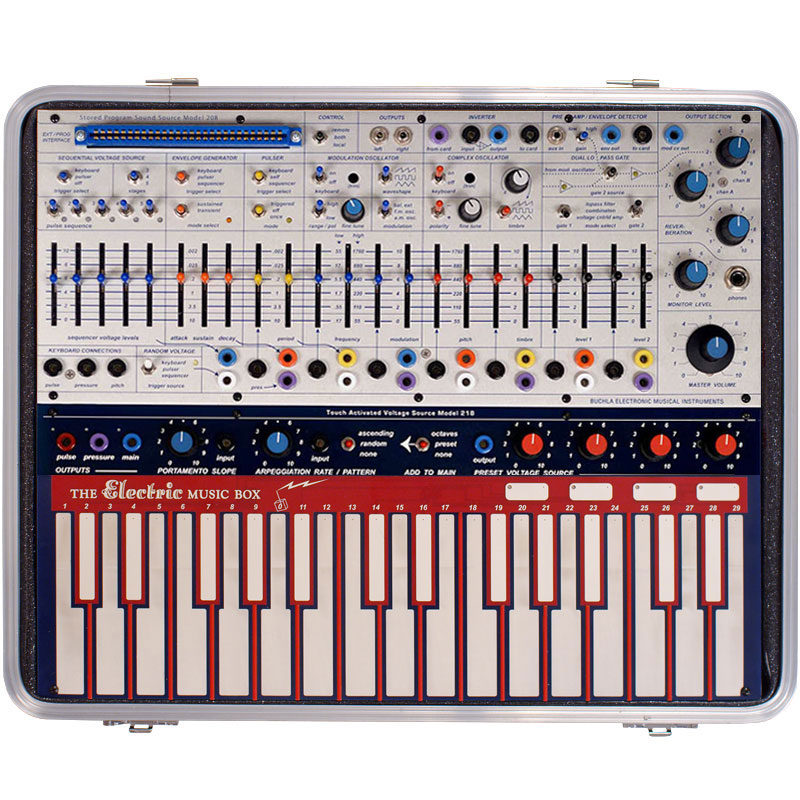 Whilst Moog understood that musicians wanted portable synthesizers that could be performed with on stage, American designer and engineer Don Buchla was less focused on making one that resembled a traditional keyboard instrument. He was motivated to create new forms of musical interaction and wanted to design a portable instrument that would encourage experimental performance and new musical techniques. This perhaps explains why Buchla would describe his creations as ‘electronic musical instruments’ rather than synthesizers.
Designed in 1973, the bizarre-looking Buchla Music Easel was designed as an integrated, color-coded workspace. Instead of using a traditional piano keyboard, the device was played by touching a flat, pressure-sensitive metal pad, enabling two internal sound engines to twist and distort each other to generate metallic, crunchy tones that passed through special light-based gates that made the notes fade out naturally. Meanwhile, sounds could be controlled and reshaped in real-time by plugging colorful, stackable banana plug wires into a central control panel.
The 1980s
During the 1980s, portable synthesizers dominated the electronic music landscape, building on the foundations laid by the vintage portable synthesizers of the 1970s, while the advent of MIDI (Musical Instrument Digital Interface) would drastically improve portability by allowing musicians to separate control from sound generation. Throughout the decade, a series of hybrid analog and digital synths such as the Roland Juno-6 and Juno-60 (1982), Yamaha DX7 (1983), Roland D-50 (1987) and Korg M1 (1988), would shape the sonic texture of popular music.
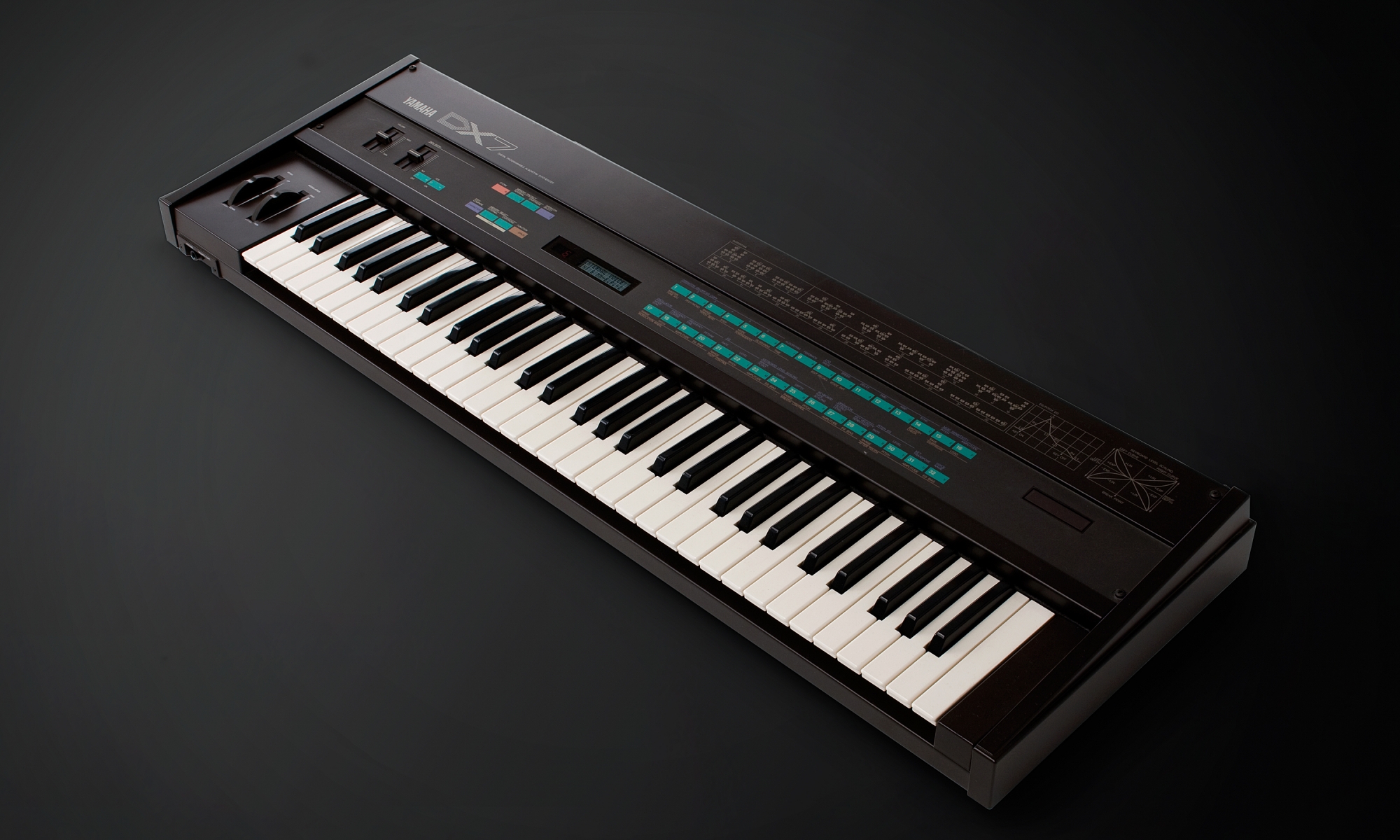
Yamaha DX7
During this era, synths would continue to evolve in size and shape as advances in electronics enabled manufacturers to make more affordable machines focused on lightweight portability, and companies like Roland would fully embrace the task with classic analog instruments such as the SH-101 (1982).
Although originally constructed from lightweight plastic and marketed as an affordable entry-level synth, the SH-101’s simple knob-per-function interface and famous Curtis CEM3340 chip produced deep basslines and piercing leads that would cement its status as a foundational synth within the techno, house, and acid house scenes. It even had a slot for an optional MGS-1 modulation handgrip, allowing musicians to throw it over their shoulder like a guitar – or ‘Keytar’ as they later became known.
Roland advert for the SH101
Alongside Roland’s equally foundational TB (Transistor Bass) range – famed for their squelchy-sounding resonant low-pass filter and slide/accent quirks, both synthesizers were able to run on batteries, taking synth portability to a whole new level.
The 1990s
The evolution of synth portability continued into the 1990s with the rise of all-in-one compact "grooveboxes" that saw synthesis migrate with software. These devices combined portable synthesizers, drum machines, and on-board sequencers to become miniature workstations - and, once again, Roland was at the helm with its innovative MC-303 groovebox (1996).
Marketed primarily to DJs, home electronic musicians, and dance music producers, the MC-303 differed from traditional analog synthesizers in that its operation was governed by a software-controlled digital architecture. Rather than relying on dedicated analog circuitry for sound generation and control, the instrument's ‘brain’ functioned as a specialized computer, using software to coordinate communication between its hardware components.
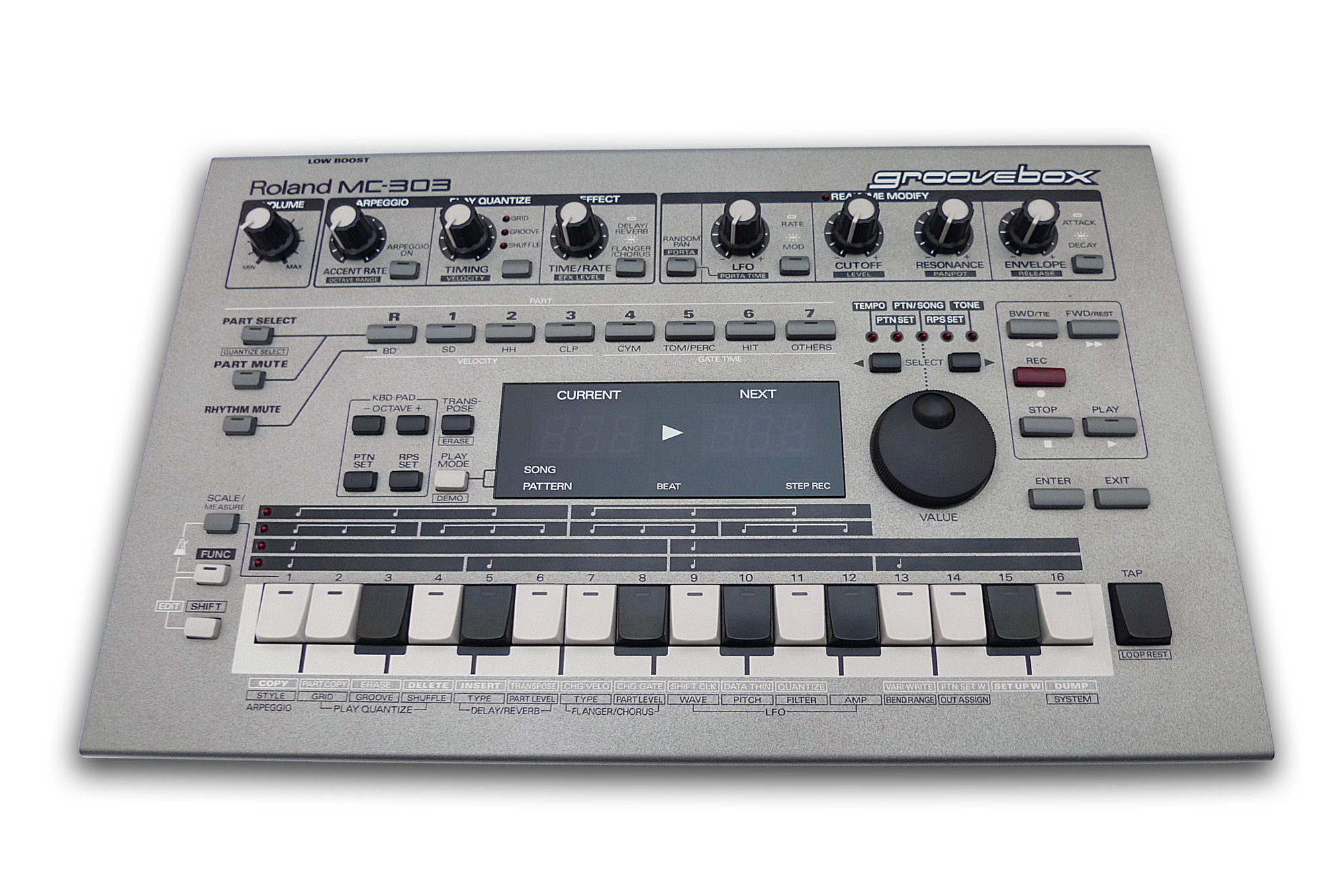
Roland MC-303
Despite its commercial success, the MC-303’s low-cost, underpowered CPU was often criticized for causing audio latency and micro-timing jitters. Therefore, in 1999, responding to demand for improved workflow and sequencing stability, rival manufacturer Korg released their own, equally successful, Electribe series, prioritizing the sort of timing steadiness required for 16th-note electronic dance music.
The 2000s
By the 2000s, portable synthesizers had evolved from the bulky analog keyboards of the 1970s into miniature digital and analog instruments that would enable electronic music creation from virtually anywhere. Continued advances in digital electronics allowed compact synths and pocket-sized samplers, often powered by batteries or USB, to become universal, while the rise of laptop music production encouraged further mobility alongside a wealth of compact MIDI controllers and portable sound modules.
However, regardless of how much users loved these devices, from a purely technological perspective they ceased to be considered revolutionary. Take the pocket-sized Korg Volca range, which caused a huge stir upon its launch in 2013.

Korg Volca FM
It may well have been the ultimate example of technology shifting towards increased refinement, but look under the hood and these devices revealed little progress from a scientific or engineering standpoint. So where would the next advance in synthesizer portability come from?
Eurorack
One of the recurring themes throughout the history of portable synthesizers is that every major innovation removed a barrier to entry. What made early portable synthesizers significant wasn't just that they were difficult to transport, but that very few people could actually build them. Enter Eurorack modular. Although not portable in the traditional sense, Eurorack exploded as both a hobbyist and professional format, fragmenting what the words ‘portable synthesizer’ even mean.
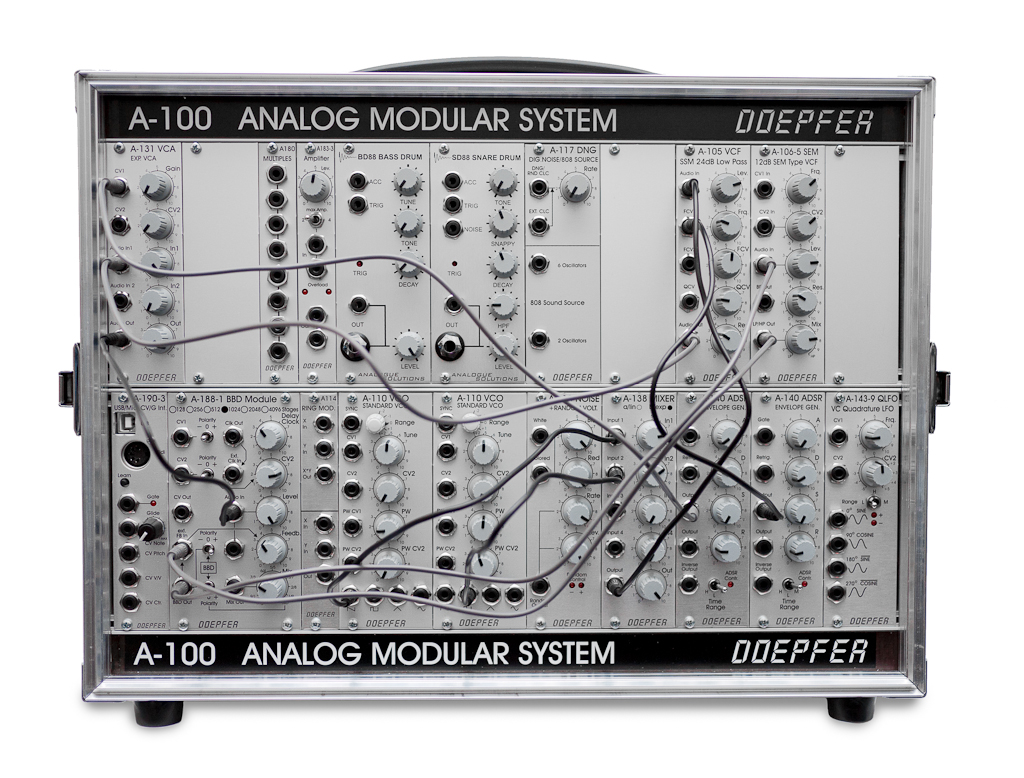
Doepfer A-100 Eurorack System
For the first time, independent designers could create and sell individual modules without building an entire instrument from scratch, dramatically lowering the barriers to innovation. The next evolution, perhaps, was not to continue creating smaller, more portable synthesizers, but to find a more accessible means of creating them.
Daisy Seed
In the 1960s, creating a portable synthesizer required expertise in analog electronics, custom circuit design, manufacturing, calibration, and substantial capital. Companies like Moog and Buchla existed because almost nobody else could do it. Today, platforms such as the Daisy Seed dramatically lower that barrier.
Daisy Seed provides audio processing, I/O, and development tools in a small module so creators can focus on instrument design, interaction, and musical ideas rather than low-level electronics. This means that small teams - or even individuals - can bring a new electronic instrument to market and democratize instrument creation.
Portable instruments such as the CHOMPI sampler and Pocket Audio’s HiChord synthesizer, looper, and drum machine - both built around the Daisy Seed platform - are notable examples of that shift. They exist not because electronic music technology became more powerful, but because the ability to create new electronic instruments became widely accessible.
In terms of funding, what used to come from universities, research institutions, or established companies, can now be enabled through a Kickstarter campaign, which allows creators to demonstrate a concept online, raise capital, present a prototype, and manufacture relatively small production runs sold directly to a passionate community of synth fanatics.
If the Minimoog Model D democratized access to electronic instruments, Daisy Seed and Kickstarter represent a new kind of democratization. One lowers the technical barriers to building an instrument, while the other lowers the financial barriers to bringing it to market. Together, they make it possible for small teams and independent creators to participate in every stage of the process, from design and prototyping to manufacturing and distribution, thus creating the next evolution of portable synthesis.